
Crochet Turning Chain Chart
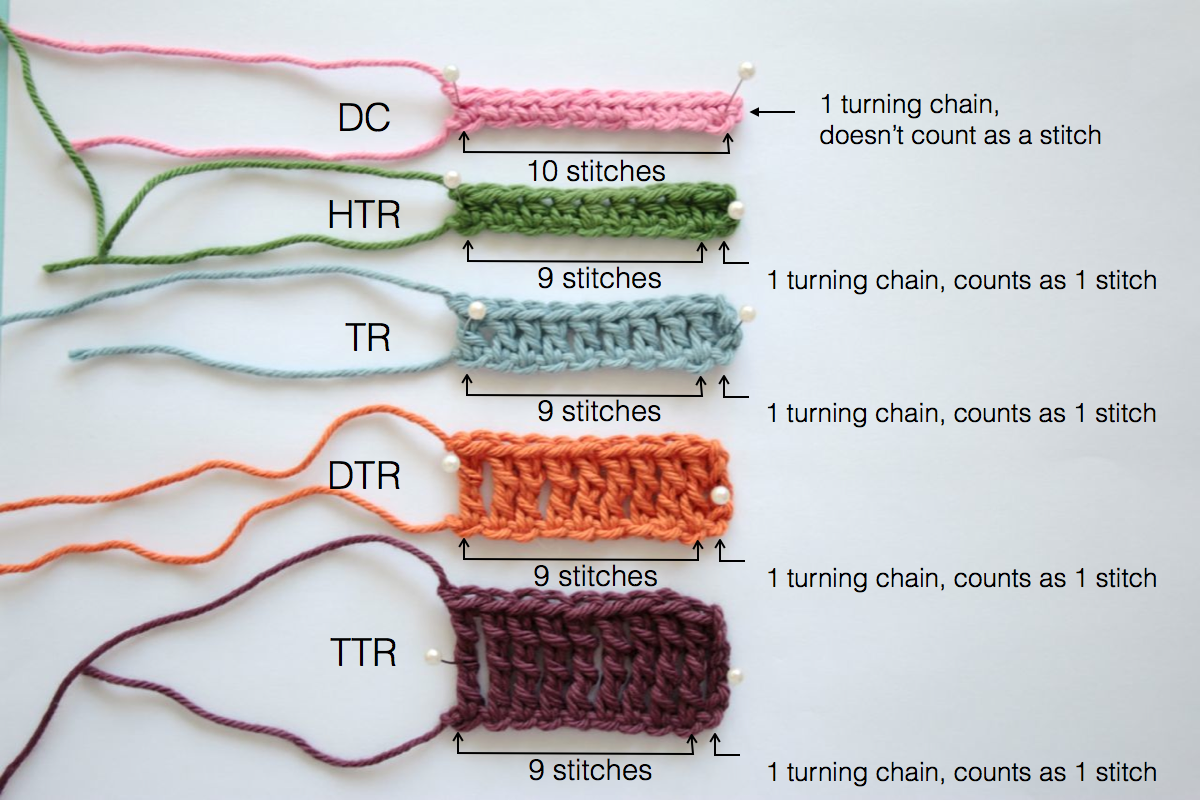
Crochet Turning Chain Chart - The turning chain is a foundational technique that all crocheters must master. Web the belgian crafters would make intricate filigrees, edgings, circles, ovals, squares, and triangles using this technique. Without a turning chain your edges will bend inward and slant toward the middle. Web we have talked about turns in crochet, crocheting on top of turning chain, whether to skip the first stitch in the row and the corresponds number of turning chain for each basic crochet stitch. Working in the round and when the next stitch in the row is not a single crochet stitch. Web in this blog post, i'll cover everything from what a crochet turning chain is and how to do one for different types of stitches, answering common questions, along with materials needed and tips & tricks for mastering this important crochet technique! Web a crocheter who learns to turn their work can make almost any pattern! In this article, we will look at the original turning chain as well as many alternatives, examining the pros and cons of each stitch style. Once you've made the first row of the crochet, turning chains start to make a little more sense. Web a really simple crochet turning chain guide with a handy saveable chart to keep as a reference for your future projects. Web the number of turning chains that you are asked to make will depend on what the next stitch of the row will be. The purpose of the turning chain is to bring your yarn to the height necessary in order to work the first stitch of your next row or round. It can be worked before or after turning your work. Web in crochet, a turning chain is we chain at the beginning of a row before we move on to the next. This will also give your project a nice clean edge. Web what are turning chains? Working in the round and when the next stitch in the row is not a single crochet stitch. However, their purpose is to make a transition between one row of crochet and the next row, their most important goal is to maintain the height of each row. So if we want to make a row of double crochet stitches, we must first crochet three chain stitches so that first stitches we crochet ‘stand straight.’. Web learn about the crochet turning chain and how many chain stitches you need for different stitches. We’ll explore alternative turning chain methods, including stacked single crochet stitches. These are the numbers that i usually stick to (although they can vary slightly with each crochet designer): Working in the round and when the next stitch in the row is not a single crochet stitch. Learn the definition of a turning chain in crochet and how many stitches. Working in the round and when the next stitch in the row is not a single crochet stitch. Web the turning chain takes the place of the first stitch in a row. Web turning chains for single crochet is the chain stitches you crochet to start a new row or round of single crochet stitches. The turning chains are used. Without a turning chain your edges will bend inward and slant toward the middle. So, you need the following number of chains as your turning chain for: Web a crocheter who learns to turn their work can make almost any pattern! Web we have talked about turns in crochet, crocheting on top of turning chain, whether to skip the first. Web we have talked about turns in crochet, crocheting on top of turning chain, whether to skip the first stitch in the row and the corresponds number of turning chain for each basic crochet stitch. Web the turning chain takes the place of the first stitch in a row. Finally, we will use the normal number of turning chains but. Web turning chains per stitch type overview. Web in crochet, a turning chain is we chain at the beginning of a row before we move on to the next. Working in the round and when the next stitch in the row is not a single crochet stitch. The purpose of the turning chain is to bring your yarn to the. Web turning chains for single crochet is the chain stitches you crochet to start a new row or round of single crochet stitches. Web the number of turning chains that you are asked to make will depend on what the next stitch of the row will be. Web the first key to an effortless turning chain is to make sure. This will also give your project a nice clean edge. Web the belgian crafters would make intricate filigrees, edgings, circles, ovals, squares, and triangles using this technique. Flip your piece like the page of a book, until your piece is on the other side of the loop on the hook. Finally, we will use the normal number of turning chains. Web the turning chain takes the place of the first stitch in a row. With your work flat, the opposite end from where you are working will be flipped over the end with the hook. Without a turning chain your edges will bend inward and slant toward the middle. The turning chain also aids in maintaining straight edges in your. So, you need the following number of chains as your turning chain for: Web in this blog post, i'll cover everything from what a crochet turning chain is and how to do one for different types of stitches, answering common questions, along with materials needed and tips & tricks for mastering this important crochet technique! Web the belgian crafters would. Without a turning chain your edges will bend inward and slant toward the middle. Web in crochet, a turning chain is we chain at the beginning of a row before we move on to the next. We make it in order to secure the right height of the row which we are starting off. Finally, we will use the normal. Web a crocheter who learns to turn their work can make almost any pattern! However, their purpose is to make a transition between one row of crochet and the next row, their most important goal is to maintain the height of each row. This will also give your project a nice clean edge. Web the first key to an effortless turning chain is to make sure you are turning your work in the correct direction. In this article, we will look at the original turning chain as well as many alternatives, examining the pros and cons of each stitch style. Without a turning chain your edges will bend inward and slant toward the middle. Web we have talked about turns in crochet, crocheting on top of turning chain, whether to skip the first stitch in the row and the corresponds number of turning chain for each basic crochet stitch. The turning chains are used to lift your hook and yarn to the level of the stitch you crochet, for the single crochet stitch this number is 1. Web in order to fully understand the turning chain, we are going to double crochet two swatches evenly in rows, with and without turning chains. These are the numbers that i usually stick to (although they can vary slightly with each crochet designer): So, you need the following number of chains as your turning chain for: In crochet, you need to work a defined number of extra chains at the beginning of every row that will bring up your yarn to the correct height for your project. Web a turning chain is the first stitch in a row (other than the foundation chain) when you’re working a crochet project that has you go back and forth vs. The turning chain also aids in maintaining straight edges in your crochet project. Finally, we will use the normal number of turning chains but crochet into the first stitch from the tch. It can be worked before or after turning your work.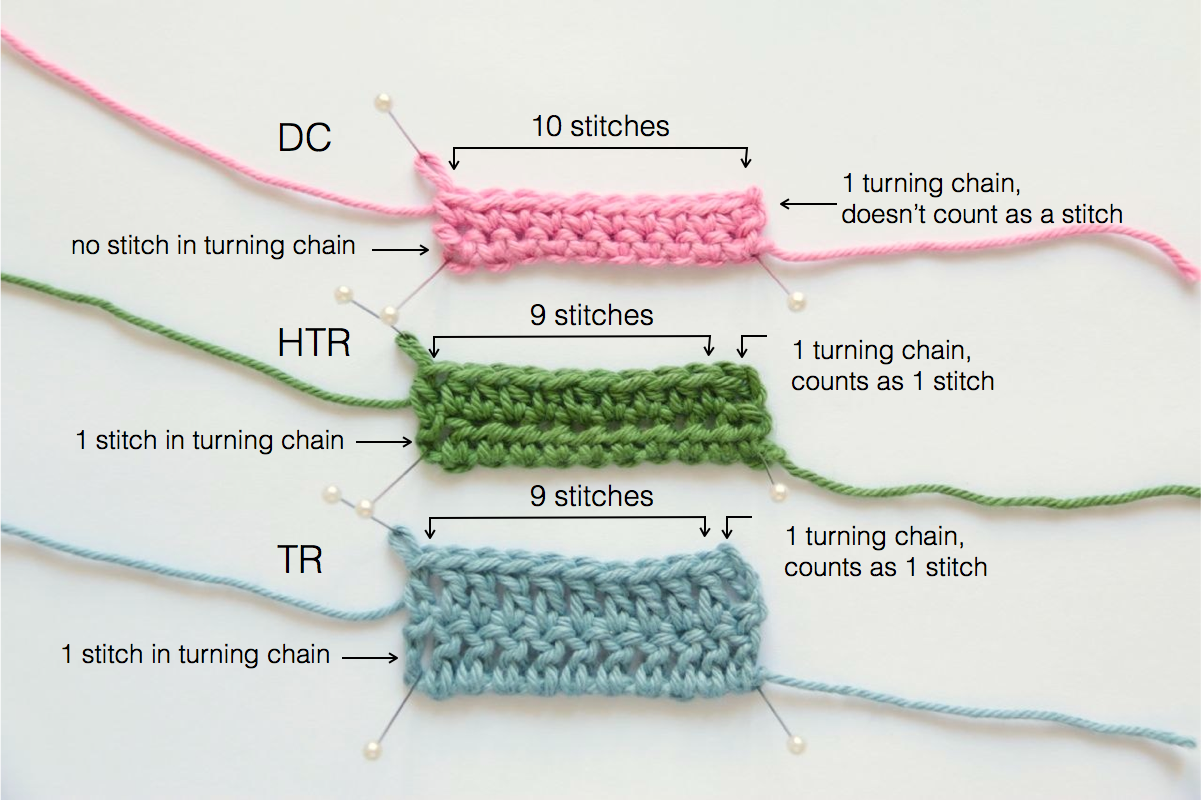
Turning Chains
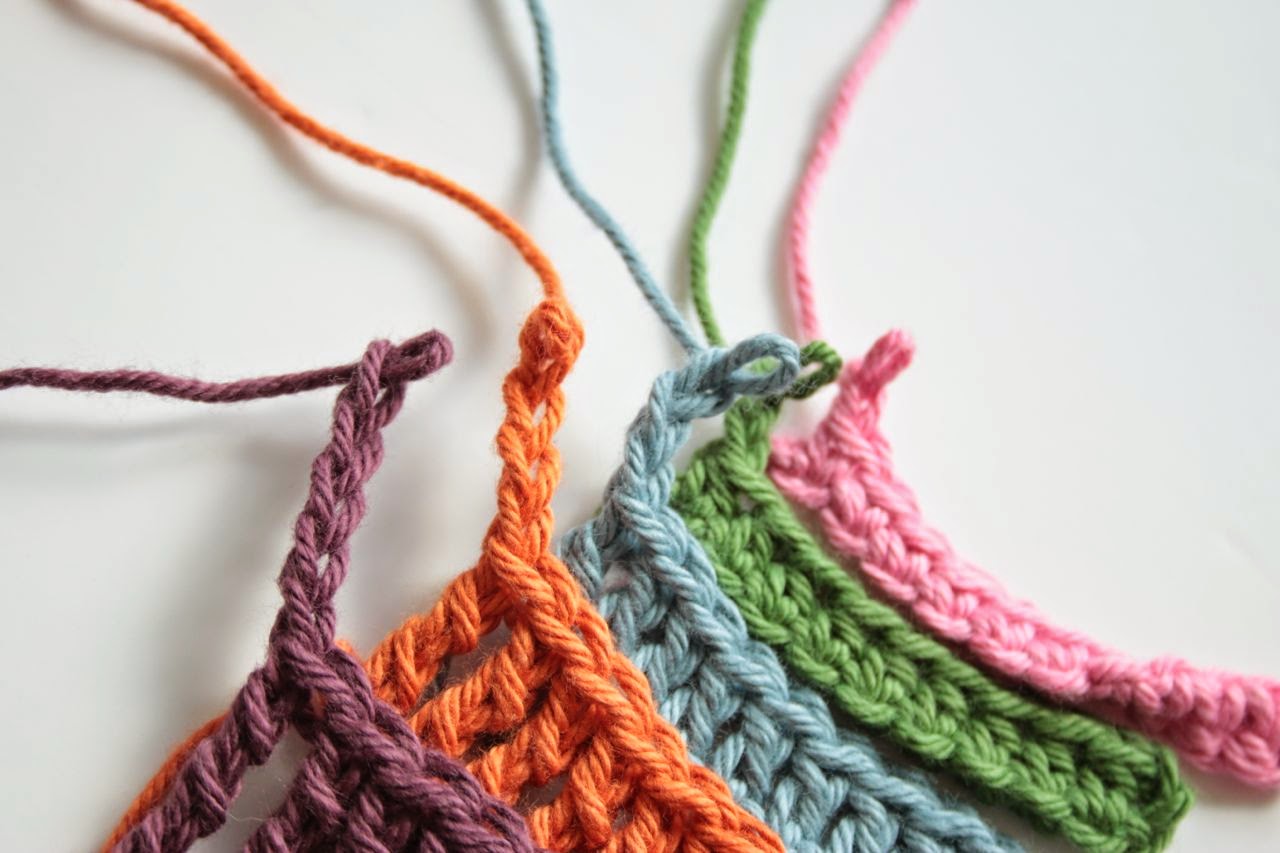
Crochet Turning Chain Chart

Crochet Turning Chain Chart
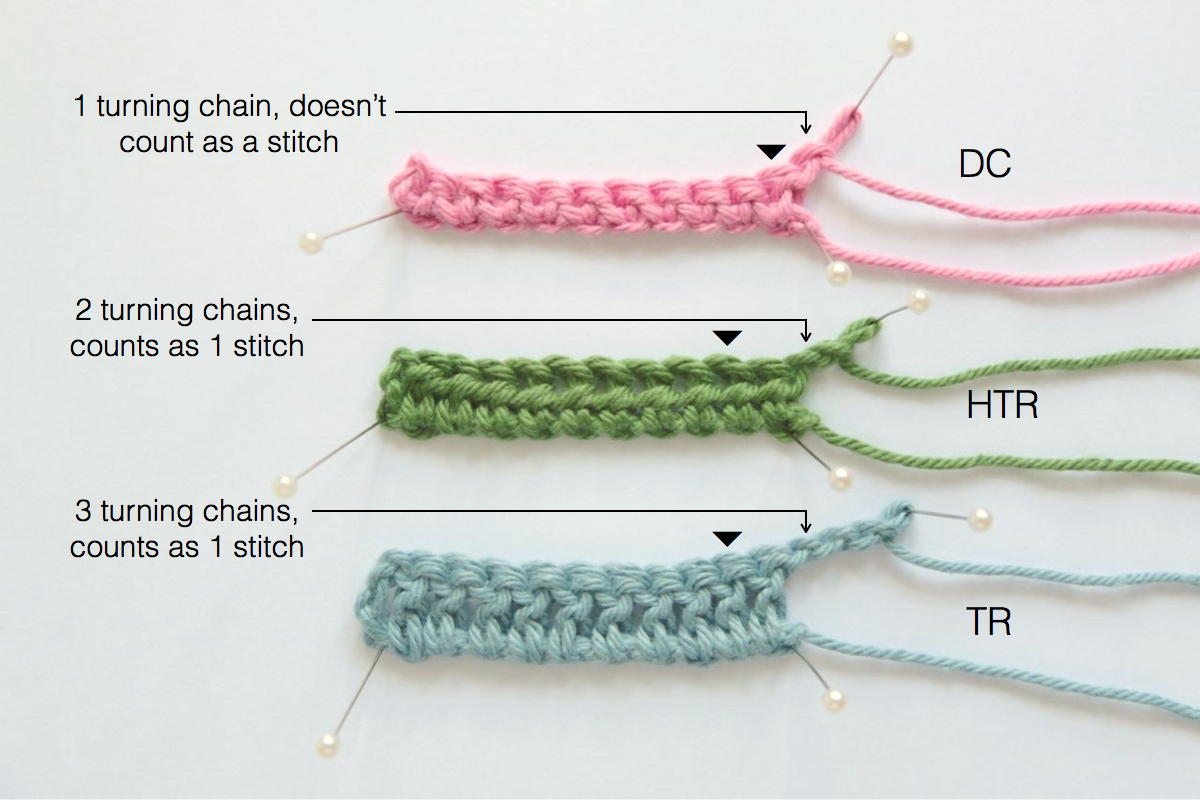
Crochet Turning Chain Chart
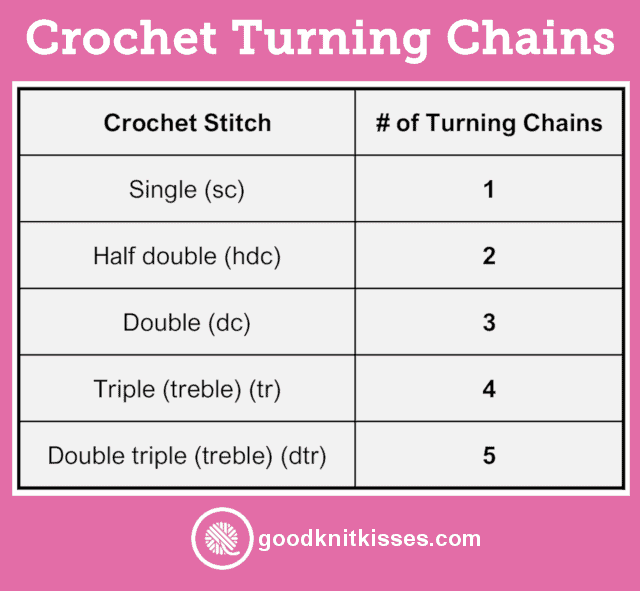
What is a Turning Chain in Crochet? Includes Chart GoodKnit Kisses

A Crochet Turning Chain Guide with Chart — byGoldenberry

Crochet Stitch Heights & Turning Chain Aabhar Creations

Starting Chains
Crochet Turning Chain Chart

Number of Turning Chains • Oombawka Design Crochet
Flip Your Piece Like The Page Of A Book, Until Your Piece Is On The Other Side Of The Loop On The Hook.
With Your Work Flat, The Opposite End From Where You Are Working Will Be Flipped Over The End With The Hook.
Web Turning Chains Per Stitch Type Overview.
Web In Order To Come Up To The Height Of The Stitch You Will Be Working, You Must Start With A Chain That Is The Same Height As The Stitches In The Row You Are Working.
Related Post: